
The Last Heroic World
Chaucer and the transformation of Western heroism

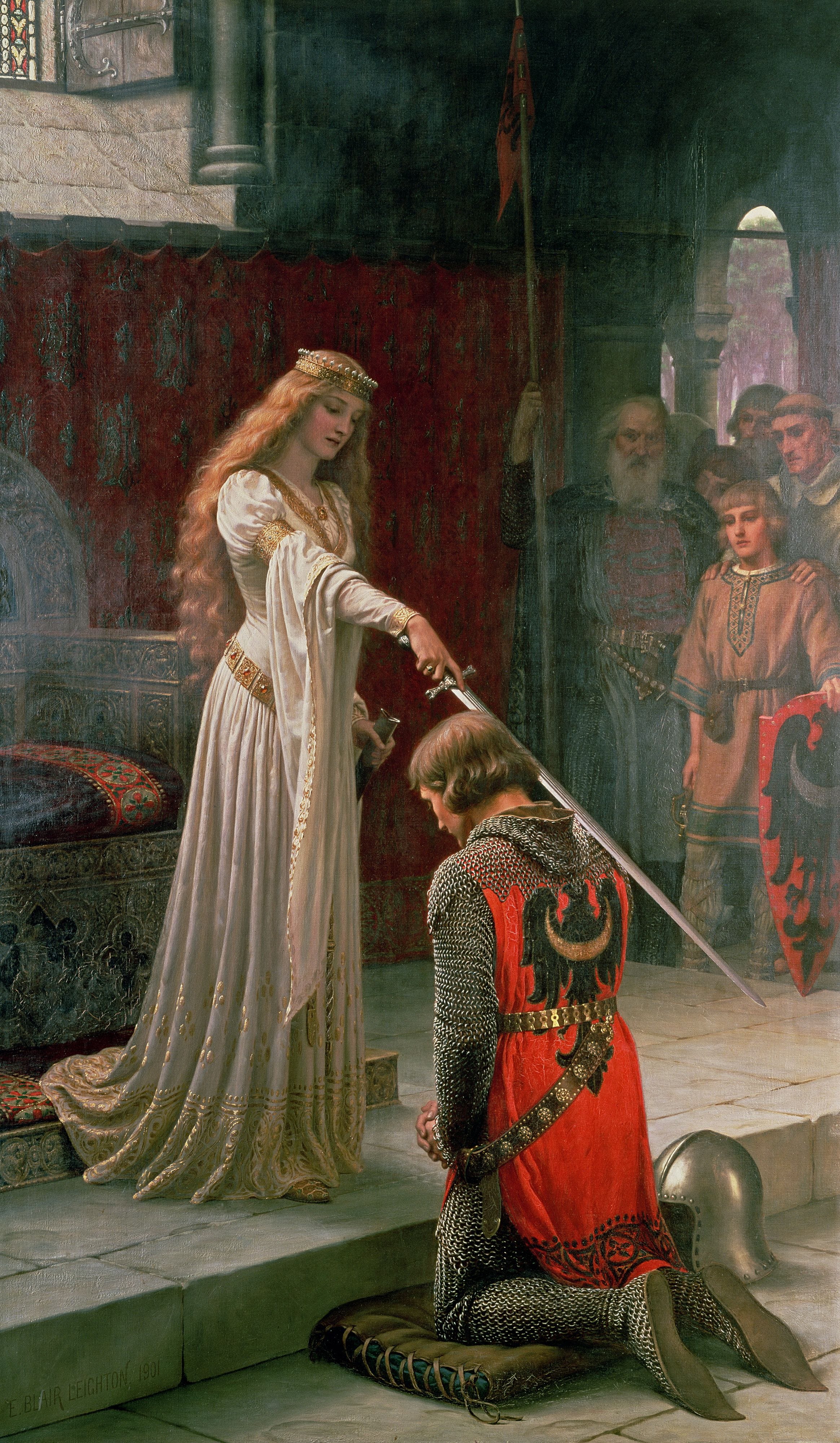
I keep returning, almost obsessively, to the question of heroism. Perhaps it is because the idea now feels as if it belongs to another civilisation entirely — something we treat with suspicion, irony, or mild embarrassment rather than admiration. The modern world often seems proud of having outgrown the hero, regarding the very notion as inseparable from outdated virtues and moral expectations. Even when heroes appear in contemporary stories, they are usually fractured, self-conscious, or quietly mocked. Straightforward greatness itself has come to feel intellectually naive.
Most of my reflections so far have circled around the ancient world — particularly what I have called the “closed horizon” of Norse mythology. This essay turns instead to a very different moment in European imagination: the world of Geoffrey Chaucer.
What fascinates me about Chaucer is not simply that he inherits the medieval ideal of knighthood, but that he stands precisely at the edge of its transformation. In his work two visions of heroism exist side by side: one still earnest, elevated, and morally serious; the other already becoming aware of its own theatricality, excess, and fragility. Nowhere is this tension clearer than in the strange proximity between The Knight’s Tale and The Tale of Sir Thopas. Something important is happening here. Chaucer seems aware both of what the heroic world once was and of what it is already beginning to become.
The Canterbury Tales unfolds through a company of pilgrims travelling from London to the shrine of St Thomas Becket at Canterbury. To pass the time on the long road, the Host of the Tabard Inn proposes a storytelling contest. The Knight — whose dignity, reputation, and worldly experience place him naturally at the head of the group — is invited to begin. He responds with The Knight’s Tale, a romance set in the ancient world of Athens and Thebes.
Theseus, duke of Athens, returns victorious from war against Thebes, bringing back among his prisoners two young Theban knights, Palamon and Arcite, whom he imprisons in Athens. From their prison window both men glimpse Emilye and immediately fall into rivalry and desire. Though Arcite is later released, he returns in disguise, unable to abandon either Emilye or his conflict with Palamon. Theseus resolves the rivalry through a grand tournament to determine which knight may marry her. What begins as chivalric romance gradually darkens into a meditation on fate, suffering, and the limits of human control.
Much later in the pilgrimage, Chaucer himself — or rather a deliberately fictionalised version of Chaucer among the pilgrims — is called upon to tell a tale. What follows is The Tale of Sir Thopas, a parody of the popular romance tradition that had shaped so much medieval heroic literature. Sir Thopas emerges less as a believable knight than as a figure assembled from the conventions of romance. He sets out to win the love of an elf-queen, yet the narrative proceeds in such repetitive and mechanical fashion that the heroic form itself begins to feel absurd. Eventually the Host interrupts, declaring he can endure no more and demanding that Chaucer tell something else.
The moment is far more significant than simple comic relief. Through his own narrative persona Chaucer stages a deeper moment of literary self-consciousness. Placed beside The Knight’s Tale, Sir Thopas reveals Chaucer standing at a remarkable historical threshold: still capable of presenting chivalric heroism with genuine seriousness, yet already aware of its growing stylisation and fragility. One can almost feel two worlds coexisting uneasily within the same text — the older heroic imagination still present, even as a more ironic and self-aware sensibility begins quietly to emerge.
There is a striking difference between the heroic world of the Norse sagas and the world inhabited by Chaucer’s knights. In the sagas, action carries an almost unbearable directness. When Týr places his hand in the jaws of Fenrir, the act draws its meaning precisely from its irreversibility. Honour lives inside the action itself. It reveals character immediately and completely.
This shift is visible almost at once in the General Prologue. Chaucer introduces the Knight not through spectacle, wealth, or physical grandeur, but through moral qualities:
“He loved chivalrye,
Trouthe and honour, freedom and curteisye.” (45–46)
Unlike older epic heroes, Chaucer’s Knight is defined first through ethical restraint and disciplined conduct. Even more telling is the line that follows:
“And though that he were worthy, he was wys,
And of his port as meke as is a mayde.” (68–69)
It is hard to imagine such a description in Homeric or Norse heroic literature. Christianity has quietly altered the moral grammar of heroism itself. The warrior is no longer judged solely by victory, strength, or reputation, but by inward discipline and moral self-restraint.
Yet Chaucer is careful not to present the Knight as merely softened or domesticated. One of the most important details arrives almost casually at the end of the portrait:
“Of fustian he were a gipoun
Al bismotered with his habergeoun.
For he was late y-come from his viage,
And wente for to doon his pilgrimage.” (75–78)
His tunic is stained from contact with armour because he has come straight from campaign. There is no glittering display of weapons, no theatrical flourish of heroic masculinity. The Knight’s dignity still emerges from lived action rather than performed image. In this sense he preserves something of the older heroic world. Honour remains tied to conduct, service, and real experience.
At the same time, the very need for Chaucer to emphasise such restraint suggests that the surrounding culture is already changing. The Knight stands out precisely because he has not fully dissolved into courtly performance. Around him lies a civilisation increasingly drawn toward ceremony, stylisation, and literary self-consciousness — a world in which heroism is beginning to separate from the directness that once sustained it.
That transformation becomes even clearer inside The Knight’s Tale itself. Although the tale opens with warfare and conquest, its central conflict arises not from the battlefield but from romantic desire. Palamon and Arcite glimpse Emilye from prison and fall simultaneously in love. In older heroic literature, conflict usually sprang from vengeance, survival, honour, or fate. Here, heroic conflict turns increasingly inward and psychological. The knight is no longer only a warrior confronting external enemies; he is also a lover suspended in emotional longing and interior conflict. Courtly love reorganises heroic identity itself.
This change becomes especially visible in the tournament arranged by Theseus. In the older heroic world, violence erupts from blood-feud, necessity, or fate itself. Chaucer’s tournament transforms combat into ceremony: regulated, publicly staged, and governed by ritual. Heroism remains martial, yet it has become increasingly theatrical.
And yet Chaucer never fully abandons the moral gravity of heroic culture. This is what makes The Knight’s Tale far more complex than simple parody or disillusionment. Arcite’s death, arriving immediately after his triumph in the tournament, restores genuine tragic weight to the narrative. Having finally achieved victory, he is thrown from his horse through a sudden turn of fortune and left mortally wounded. Heroic accomplishment no longer guarantees mastery over fate. Yet the response to suffering still retains dignity. Arcite’s final speech is marked not by bitterness or theatrical despair, but by restraint, sorrow, and acceptance. Chaucer allows the knight to remain noble even in fragility and uncertainty.
It is precisely from this tension that The Tale of Sir Thopas emerges. Chaucer places the parody almost beside genuine chivalric seriousness, as though one world were already casting a shadow over the other. In Sir Thopas, the heroic ideal survives largely as literary machinery, continuing after the deeper beliefs sustaining it have begun to weaken. The contrast with the Knight is striking. Chaucer’s Knight still carries traces of lived experience upon his body; Sir Thopas seems assembled almost entirely from romance convention.
The Host’s interruption therefore carries significance beyond mere comic relief. It is not simply that the tale is bad or childish. Rather, Chaucer exposes a world in which heroic form risks continuing even after the conditions capable of sustaining sincere belief in that form have begun to erode. Irony enters because the performance has become visible as performance.
And this is what ultimately makes Chaucer such a profound threshold figure. He writes at the moment when Western heroism begins turning inward and watching itself from the outside. The heroic ideal no longer exists solely in battle and fate, but increasingly within narrative, ceremony, and social performance. From this world, figures like Don Quixote will eventually emerge — men attempting to inhabit heroic forms after the civilisation sustaining them has largely ceased to believe in them. Yet Chaucer himself stands earlier, at a more ambiguous and humane moment. His world has become self-conscious, but not yet disenchanted; ironic, but not yet hollow. Heroism can no longer be inhabited innocently, yet it still retains enough moral gravity for its loss — or transformation — to matter deeply.
Works refernced
Geoffrey Chaucer, The Canterbury Tales: Seventeen Tales and the General Prologue, ed. V. A. Kolve and Glending Olson (Norton Critical Edition, 2018).
Excellent analysis.
I think this is beautifully and thoughtfully crafted, but I would respectfully qualify your concluding claim. Chaucer may be a threshold figure for late medieval chivalric heroism, but I’m not persuaded that he marks the moment when “Western heroism begins turning inward and watching itself from the outside.” That self-consciousness is already fundamental to the heroic ideal in the Homeric epics.
In the Iliad and Odyssey, we have grand narrative, elaborate ceremony, calculated social performance, and obsessive anticipation with being seen, sung, judged and remembered. Achilles’ crisis in the Iliad is not simply whether to fight, but what kind of story his life will become. He has to come to terms with his own kleos. Isn’t that heroic self-consciousness at its most acute?
What changes is not its existence, but rather its character. In Homer, heroic self-consciousness is primarily oriented on memorialization: the hero acts under the eyes of others (and the imagined judgment of future poets and singers). The ideal is metered to ensure preservation. I’m no expert on Chaucer, but by his era that heroic self-consciousness seems to become more inwardly reflective, and, dare I say, “socially conscious.” HIs world was increasingly amenable to parody, irony, and even comedy, although it was still one where armed men were prickly about their honor, and a breach of etiquette could earn you a thrashing or worse.
He and his contemporaries may have been doing what the Odyssey did to the Iliad in terms of modulating the heroic tonal register. The Odyssey shifted the Iliadic economy of battle — martial speech, rank, prizes, visible excellence, and recognition — to an Odyssean economy: wit, ingenuity, intelligence, speech, deception, and self-preservation.
That’s my long way of saying I think the heroic ideal was born already watching itself. Thanks for making me revisit my priors. I’m going to have to bone up on Chaucer.